Formerly called Luzid
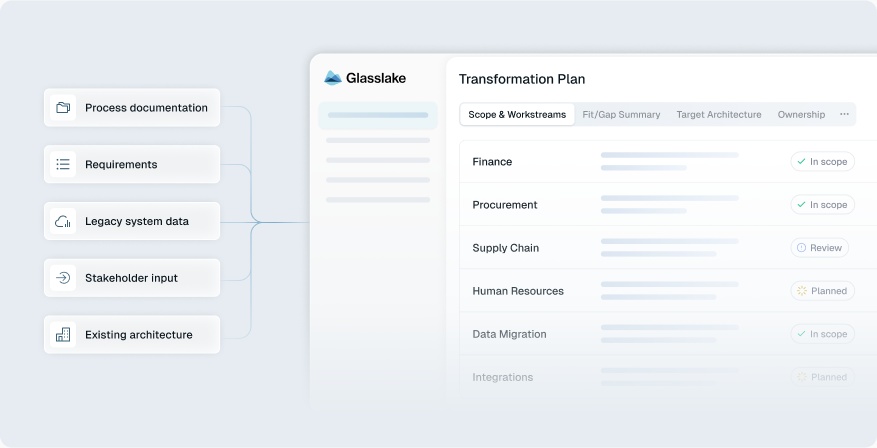
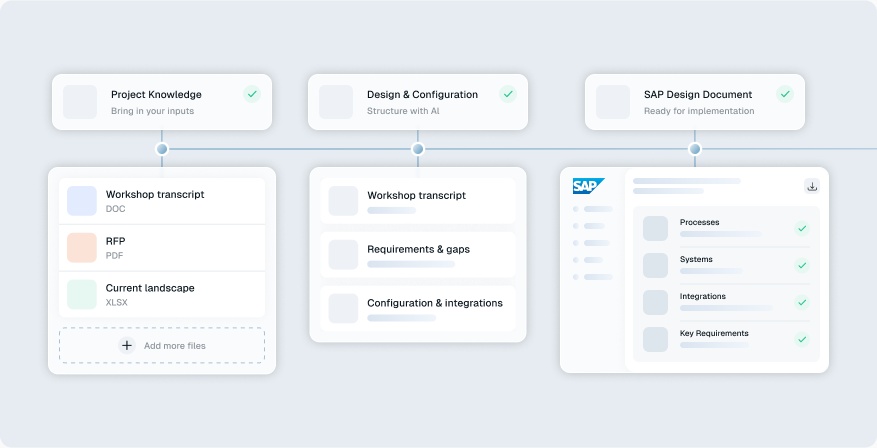
Turn scattered documents and legacy knowledge into a clear, unified project blueprint before major budgets are spent.
For organizations that need deeper customization and extensibility, with the flexibility to take a brownfield, greenfield, or hybrid path. Glasslake captures fit-gap decisions, monitors scope against clean-core principles, and turns workshops into traceable plans so complex transformations stay on track.
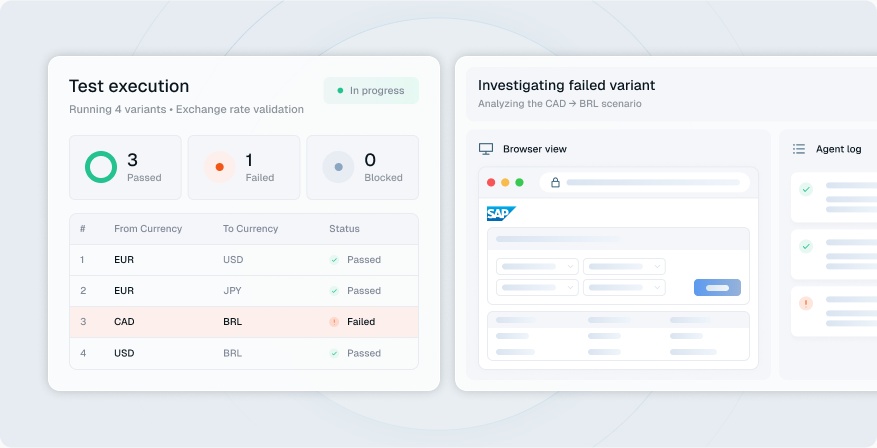
For organizations adopting a standardized, fit-to-standard model with faster, regular release cycles. Glasslake speeds up fit-to-standard analysis, documents configuration decisions, and generates requirements-aligned test scenarios so you stay current with each release without losing control.
Continuous scope monitoring and transforming code analysis and workshop notes into structured, traceable plans—preventing redesign creep while maintaining clean-core principles.
Define a clean, standard process baseline fast—then turn workshop outcomes into a prioritized, traceable backlog that keeps design decisions locked and reduces rework while you adopt clean-core from day one.
After 30 years in the SAP ecosystem and having evaluated many solutions, I can say Glasslake finally addresses the root causes of implementation failure with proactive intelligence and real-time control.
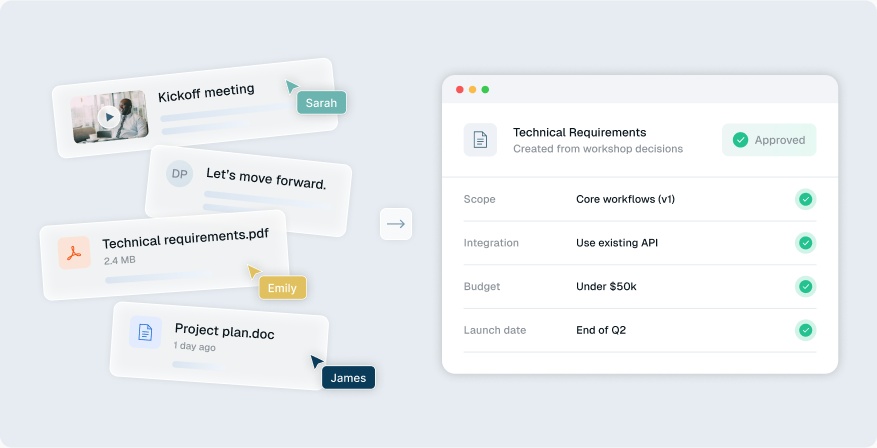
Most of the pain in SAP implementation is caused by miscommunication and human error. Glasslake helps by listening in workshops, surfacing the questions that could be missed, and turning those conversations into decisions you can trace. When those same decisions automatically become tests and evidence, you eliminate the rework that normally explodes later in UAT.
With Glasslake, workshops become decisions, decisions become tests, and tests become proof. Run with real-time, traceable intelligence that lowers rework and reduces risk from day one.
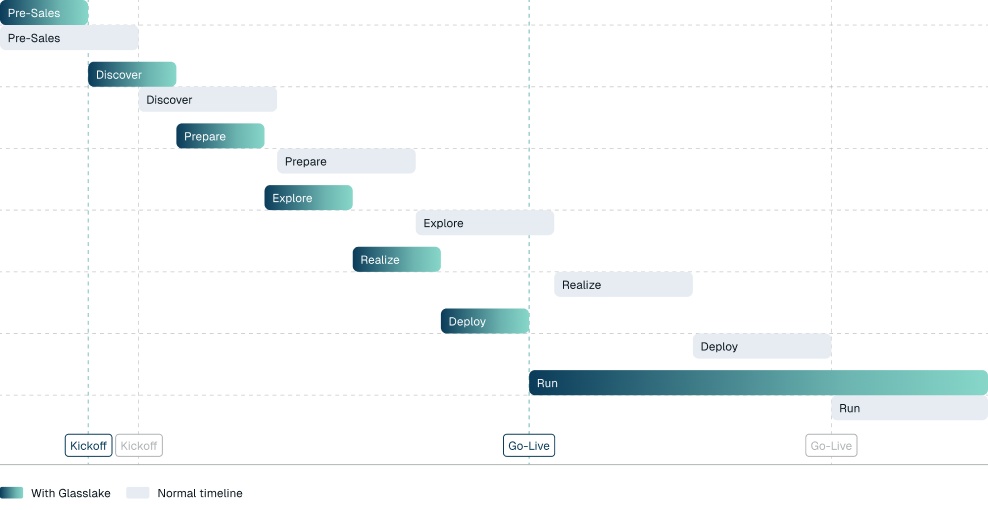
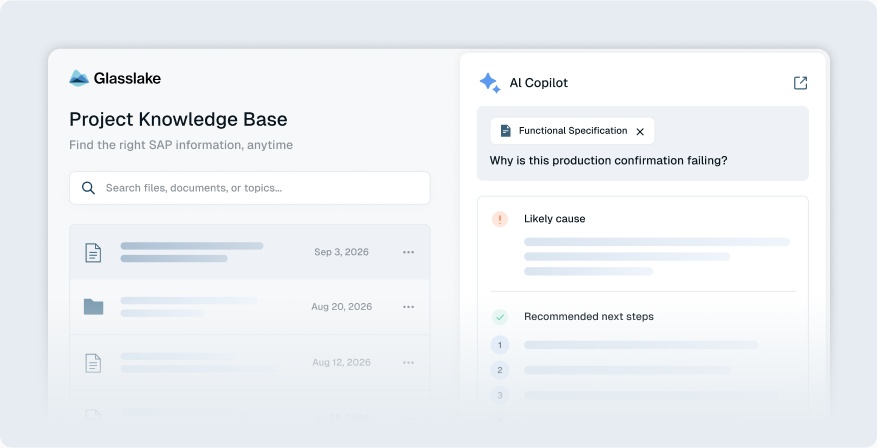
You cannot automate what you cannot understand, trace, or govern. Glasslake’s AI-based platform connects workshops, decisions, requirements, tests, and execution into one intelligence layer — accelerating execution, reducing time to value, and optimizing resources. That is how leading companies move beyond manual coordination.